Showing posts with label politics. Show all posts

Saturday, 27 February 2010

The Ugly Truth About Wimmin

I came across this article in The Times about the 'secret lives' of women. The lives they live in their heads that they never let their partners into. Everyone needs a personal psychological space, and I respect that. In fact, I wholly endorse it. I wanted to read the article, though, because talking to a reporter gives people an anonymity they would not have otherwise, and that gives them a chance to be honest in a way they simply couldn't be otherwise. I wanted to learn about these secret female spaces, so I could better respect them.

But boy... did I learn.

It turns out all those ugly stereotypes are true and women really are disingenuous, manipulative, emotionally vapid harpies with obsessions about sex, shoes, lying and... well, anything but their 'soul mates'.

Don't believe me? Here are some choice quotes... (Oh, and the article was written by a woman, so this is all straight from the horse's mouth)

If they’re looking to regain self-esteem, the first place they look is sex with someone new.

“It was brief and very intense. It filled a gap in my life, and what it highlighted for both of us [he was also married] was how terrified we were of losing what we had with our spouses. I am so glad that my husband never found out, because the damage would have been immense. But then I wonder sometimes whether he suspected and turned a blind eye, that he knew everything would be all right between us as long as I didn’t confess, that it was something transient.”

Some women would rather have affairs than tell their partners that they want more in bed, believes psychoanalytic psychotherapist Jenny Riddell.

Ruth, 43, deliberately initiated a one-night stand when she was abroad for work. “I had been married for ten years to my first boyfriend, and I think I just wanted to prove that I could. It made me feel wonderful, because I had never had that experience before.”

"And how terrific when the crush dissolves, as it inevitably does, to feel the innocence of one who has done nothing more than commit adultery in her heart."

Or take Susanna, 34, who works in human resources. She has been married for years, but is enjoying a series of erotic e-mails and texts with a man she would never consider actually having an affair with. “I have to turn my phone off at night; I can’t sleep because it is so exciting. I need this, because I know I met my husband too young. I love him and will be married to him for ever, but I need this kind of exciting distraction.”

Few men realise just how much their partners sigh inwardly at male stupidity – and then discuss it with their female friends.

Women tell blatant lies about any mishap that might reinforce female stereotypes – crashing the car, buying new clothes. “He has absolutely no idea how much I spend on my hair, and if he did, he would be horrified,” says Clara, 40, who works in publishing.

Many working women (myself included) keep a running-away account, often secret, a sensible precaution when experience shows that men cannot necessarily be relied upon to support us. I know how much money my husband doesn’t have, and he knows that I have money in a separate account. But he will never know how much, because we might need it for something far more important than his Arsenal season ticket one day.

“He gets cross when I buy organic apples. So I put £200 a month into this account so that I can buy all the little luxuries that I want – like strawberries out of season, or expensive make-up – without him noticing. I want that freedom to be able to spend money frivolously, but I also don’t want that to be a sticky aspect of our marriage.”

“Men are so simple. They think we are complicated and devious, but they don’t think to ask us what we want, and we don’t say,” says Clara.

I used to think all those love songs were about men and women,” a new mother told me for my book Life After Birth. “But it is only now that I understand how all those words are really meant for your child."

“If he were killed in a car crash, I’d be more worried about how it would upset the children. I could cope with my grief, but I am not sure I could cope with theirs.”

There is a big difference between hiding an ongoing affair, where you have fallen out of love with your partner but can’t bear to end the relationship, and the casual fling, which was unfortunate, but didn’t mean anything. Not every affair needs to be confessed, particularly if your prime motivation is to appease your own guilt.

And what about their sample?

Sarah, 35, Company manager;
Helen, early 50's, travels abroad regularly for work;
Evie, 45, married to her childhood sweetheart for 25 years, 2 children, finacial difficulties;
Ruth, 43, abroad for work;
Caroline, 45, an architect;
Susanna, 34, HR;
Pat, early fifties, local government;
Clara, 40, publishing;
Carmilla; earns a small fortune in the City of London;
Joanne, 40, lawyer;
Ah, I see the white, upper-middle class career-type is well represented. Which is good, because it's a known, proven-by-science fact that they can speak for every woman, everywhere. Such a representative sample also rules out the possibility that the similarities in their views and experiences might be down to similarities in their circumstances and lifestyles, rather than solely due to their sex.

I think the best bit has to be the quotes from actual, real women on pages 3 and 4.

Thank you, Murdoch press, for bringing the truth! I'm so glad that the truth, once again, panders to my insecurities and reinforces my sense of entitlement. I'm really grateful you're here to protect me from a world where I might have to think and challenge the assumptions I hold about people who aren't me!


Saturday, 20 February 2010

Erm... Parentsplaining?

FWD/Forward has a very good, succinct discussion of 'splaining.  I like it, because the discussion directly relates the concept to using your position of privilege to take away someone else's power of self-expression.  In short, it's a man using his position of privilege to tell a woman her experiences of being a woman are less worthwhile than his opinions on what it's like to be a woman, or a temporally able-bodied person telling a disabled person that their opinions on disability are more valid that the disabled persons experiences.  A classic example is a minority being told by people who aren't part of the minority, 'You've got no reason to be offended by that'.

I've seen it used in a more general way, to refer to when a person of privilege assumes their opinions on anything are of more value then the opinions of a person they are privileged over.  The guy telling my friend how to start her motorbike, for example.  It's a definition I have a few problems with, because it's a bit vague and woolly and open to interpretation.  If I was speaking to a female writer, for example, and made suggestions on how she could improve her prose, she could accuse me of mansplaining.  Until she knows that I dedicate a lot of my time to perfecting prose, she would probably have every right to think that.  Conversely, a female who doesn't write could tell me how to improve my prose, and there would be no portmanteaux for that.

Something I've heard parents say a lot is, 'you don't have children, you don't understand, you have no right to tell me how to raise my children'.  It really, really gets my back up.  Underlying it seems to be an assumption that when you become a parent, you are automatically granted access to a special set of skills and knowledges that only fertilizing an egg or forcing a baby out of your vagina can give you access to.  I mean, maybe that's true.  When you decide to raise a child, maybe you're automatically granted a few levels in parenting.  Evidence seems to suggest that you learn to raise children the same way humans learn everything else, though:  Trail and error; and imitation. 

If I were to tell a parent that they shouldn't treat their child like x, y or z, it seems that I would 'splaining to them.  Me, with no personal experience, telling someone who does have personal experience how to do it better.  To an extent, I totally agree with that.  I wouldn't assume I could change a nappy or give a child a bath, much less tell a parent how to do it. 

There's a line somewhere, though.  If I saw a mother smacking the crap out of her child in a restaurant, I'd feel morally obliged to step in.  I also think that raising children on a diet of deep-fried pizza and chips is wrong, and I wouldn't feel unjustified in telling parents they should introduce some fruit and veg into their children's diet.  If parentsplaining can, in fact, exist, then only people who are parents themselves should be allowed to work in child protection services. 

If parentsplaining can exist, and people without children can tell parents that drying your child with a cheese grater is wrong, then parentsplaining is qualified.  Those without personal experience can tell those with personal experience they're doing it wrong under some circumstances.

Perhaps parentsplaining can't exist.  Perhaps parentsplaining can't exist because parents are the socially accepted norm, and are therefore in the position of privilege over the childless.  Perhaps the fact that demonstrable harm is being done to a child is a pretty clear and unambiguous line that doesn't exist in other instances of 'splaining.  Perhaps the fact that children are a disempowered group themselves means parentsplaining isn't comparable to other instances.  Perhaps it's the fact that being a parent is--a lot of the time--a choice, while being a woman, or disabled, or of colour isn't that makes the situation different.

Clearly, I don't understand 'splaining yet.  Before I can understand and assimilate a concept, I need to boil it do to its quintessential essence and watch the vital parts twitch and move.  Then I can slowly, carefully, put the variations back in.  This is just me thinking aloud here, fiddling with my Bunsen burner, my test tubes and my Petri dishes.  Why do I need to write a blog post about it?  Because I need to write about things to examine them.  Prose is my laboratory.  And I'm posting it in public because, I dunno, maybe someone else will find it useful.  Plus, of course, I've got a ego to placate...


Tuesday, 2 February 2010

There's always a bigger fish

I was sad to read about Kraft buying Cadbury. When I was young, my dad used to go down the Off-Licence and bring us back bars of chocolate. There was always something special about Cadbury's. It was like there was chocolate, and then there was Cadbury's chocolate and Cadbury's was real chocolate.

I've been through this too many times to genuinely mourn. My childhood was twenty years ago and the things which made it special are dying. That's just what happens.

What really made me think was a line in the BBC report:
Earlier, Cadbury workers had staged protests in London calling for government support to guarantee jobs.

There are two things wrong with that. The first I'll get to, but the second is that there's nothing unusual about that.

I have a friend who believes--passionately--in a version of free-market economics. He's never read a damned thing about the theory or history, but when he talks it's enough to convince almost anyone short of Karl Marx. His idea is of hundreds of businesses all competing for the same buck. The companies are small, dynamic and cut-throat. They form and disappear like bubbles in a glass of Pepsi. They respond to changing consumer and worker tastes like salmon swimming upstream.

It's a model which means you can't get too attached to your business because you may wake up one day and realise you need to change it beyond recognition. That means it's got to be cheap and easy to set up a business. It also means someone can go from being a CEO to a stock boy and back again in a week.

There's no fear keeping people in their jobs, so if you want to keep your employees you have to keep them happy. There's plenty of other places for customers to go, so you've got to keep them happy, too.

Who loses in this model? Prices will be higher, because bulk production suddenly becomes impossible. There'll be no more chain stores and each town with have it's own set of shops, so you'll have to learn each town's shopping ecosystem individually: There's none of that comfort which comes from being able to walk into a strange town and get a cup of your favourite coffee.

The big losers are the shareholders and the CEO's. Those guys who don't do any real work and get all the rewards. Those guys who decide to pay their workers the bare legal minimum and fire them for independent thinking. Everybody, everybody, will have to work for a living.

That's the way my friend talks about it, anyway.

The trouble we have with the system at the moment is that the power is in the hands of those shareholders and CEO's. Those people who never have to look their workers in the face and never have to watch the consequences of their actions, much less live through them.

Western history is a bloody, gruesome place. A lot of that blood and gore was splattered in attempts to give people some power in their lives. Free the serfs. Free the slaves. Establish a parliament accountable to its people. Give every man and woman--regardless of income--a vote. Now look what we've done with our hard-worn inheritance... The shareholders decide to sell, and thousands of peoples' lives are destroyed. Jobs are scraps flicked off the CEO's tables to keep their precious machines oiled. They'll flick them somewhere else, if they prefer. And there's nothing anyone can do to stop them.

I just think it's sad.


Thursday, 28 January 2010

How wise we are in the full blush of ignorance

I think I'm going to have to come clean about Jeff and Ann VanderMeer's Steampunk. I'm more of a lifestyler than a fan of the literary side of things, and there's an increasing gap between the British and US scenes. I need--no, I want to get into the literary and aesthetic side of Steampunk. I at least want to understand the mainstream literary Steampunk. I'm a writer, I'm a Steampunk, and it's foolish to be in ignorance of what else is happening around me.

The problem with a lot of the things which seem to be coming out the US of late is that they somehow don't seem to 'get' my idea of Steampunk. Look at Abney Park: They're selling pre-made, leather 'high-altitude masks' on their website. Captain Robert, their lead singer, is winning a popularity poll for Steampunks for, 'making Steampunk sexy'. In short, it's all steam and no punk.

I thought the VanderMeer's anthology would be more of the same.

Ha!

Let me quote a bit from Jess Nevin's wonderful introduction (which I read while sitting in Speaker's Corner on a Sunday morning):
“Steampunk, like all good punk, rebels against the system it portrays (Victorian London or something quiet like it), critiquing its treatment of the underclass, its validation of the privileged at the cost of everyone else, its lack of mercy, its cutthroat capitalism. Like the punks streampunk rarely offers a solution to the problems is decries--for steampunk, there is no solution...”

Maybe one day, I'll learn to control my expectations before I judge. I'm about half-way through, and already I've got an awful lot of food for thought. I've been made to pause at least once and think, 'what's that doing in here? That's not Steampunk', only to go away, think about it, and realise it's probably the most Steampunk story of the collection so far.

I've mentioned Jeste der Vries' Shine Anthology before. I love the fact he's going out of his way to find positive SF. The tendency for SF these days is to be all doom and gloom, and it gets on my wick. I don't want to read stories about how climate change is going to kill us all and it's all our own fault, no matter how well-written they are. 'Humanity is going to kill itself through its own arrogance, short-sightedness and greed' is a tired old sci-fi trope, and I much prefer it explored through the Cold War.

He's made me go away, and look at the things I'm writing. Am I wallowing, or am I trying to do something positive? When critiquing someone's writing or ideas, I don't like to point out problems without offering solutions.

Let me quote a little more from Jess Nevin:
“But most second generation steampunk is not true steampunk--there is little to nothing 'punk' about it. The politics of the punk position have largely disappeared from second generation steampunk, and most of it is more accurately described as 'steam sci-fi' or, following John Clute, 'gaslight romance'.”

So let me introduce third generation Steampunk: Steampunk with solutions. Steampunk written by people of China, India, Tieland, Mexico and everywhere else in the world that deals with the issues they have to fight with a thousand miles geographically, culturally and socially from Victorian London as well as we British with our issues. And Steampunk that sees hope on the horizon. We're not just writers; we're environmentalists, activists, anarchists, makers and a dozen-and-a-half other things. Our solutions runneth over. Us writers, we've got to stress-test them, try and break them and then try to fix them.


Friday, 8 January 2010

In my own image

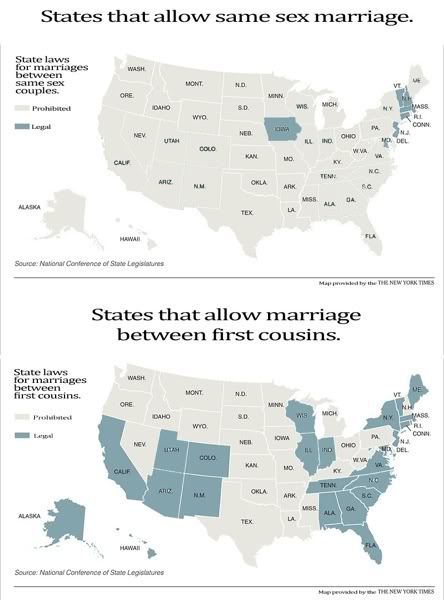
I just wanted to share two, very different, maps with you.

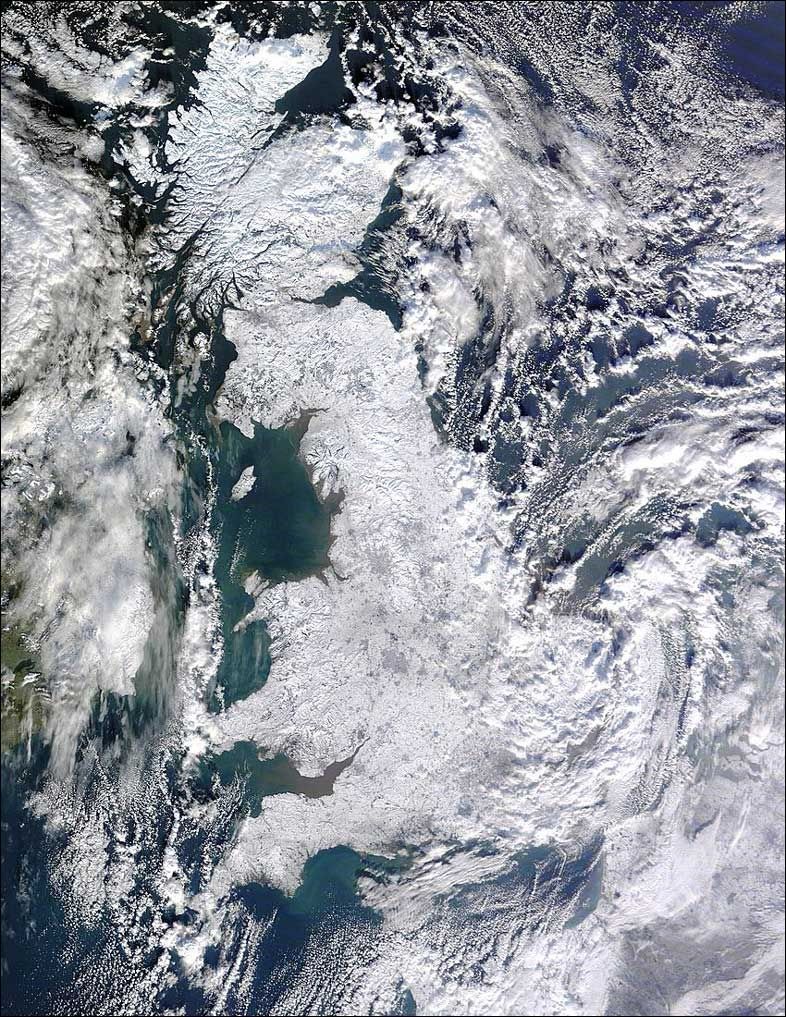
The first is from the BBC and does a good job of explaining why I've been finding it so hard to get out of bed recently:


It's from this page on the BBC, but was also on the front of the Indepedent and the Telegraph this morning. I really, really hate the fact that, the moment weather deviates from the norm in this country (too hot, too cold, too windy etc) the entire infastructure falls apart. It makes me want to move to France. It's not that pictures like this make me any more forgiving, but it's something of a shock to see our green and pleasant land covered in Tip-Ex.

The other picture was this, very different, one:


All about family values, eh? You know, keeping things in the family...

In other news, the BBC reports that we should be getting a whole load of new wind farms here in the UK. Wonderful news. Of course, people will protest. 'It spoils the view', they'll say. Now, that's talking from a position of privilege. Words don't describe how stupid, arrogant and selfish those people are. They should be made to live in a world of their own creating. What really gets me is that wind farms are far, far less intrusive on the landscape then over-ground electricity pylons. Do these people campaign to have them taken down? Do these people rename their towns, 'a-quiet-and-beautiful-little-Welsh-village-where-those-bastard-English-are-endangering-some-wildlife-I've-found-I-can-hang-my-NIMBYism-on'? No. That would mean them giving up their electricity. Can't even contemplate that. Can't fathom the idea of giving up their entitled privilege for their principles. Far, far better that other people--people they don't know--suffer so they can maintain their cosy, selfish little worlds.

Wednesday, 11 November 2009

Property is theft. Theft is illegal. Break the law, you go to goal.

The good news from Pittsburgh is that is all changes against the Tortuga Twitter Two--good friends of Steampunk Magazine and freedom lovers everywhere--have been dropped.  Just a little bit of pressure, and the government drop the case quicker than a flaming, radioactive, Arab-looking potato.  I guess they wanted to make a statement and weren’t prepared for any sort of fighting back.

The bad news is that, not only are they not going to have their possessions returned in the near future, but the feds have been given the go-ahead to rummage through everything to see if there’s anything which takes their fancy.  They can make copies of any electronic data before returning their laptops, memory cards and other electronic gumpth.

The property was seized under a Grand Jury investigation, the purpose of which remains a mystery.  Of course, if they find evidence of other crimes during the searches, I’m sure they’ll be sure to prosecute. 

So it turns out that, if you live in the US and you do something the government don’t like, they can harass, bully and try to intimidate you, steal your possessions, invade your privacy, and search every aspect of your life to see if they can find a crime you’ve committed.  Whose freedoms are being protected here?

The idea that governments exist to protect freedom or protect people is of course a mis-conception.  Like any body with power, governments exist to protect their own power.  I guess it’s just kind of scary to see it so naked.  I guess it’s also scary because, although I believe in what the Professor was doing and I believe in the cause he’s fighting for, and although I’m in another country with another government… I’m scared that it might be me one day.  One day, I’ll be trying to do what I think is right, and it’ll be me sitting where he is.

If one good thing can come of this, it’s that they seized copies of Steampunk Magazine and a few more people out there might enjoy Of Mice and Journeymen.  Hey, if I can’t be selfish and glib, what have I got left?


Tuesday, 6 October 2009

Steampunk may have its first political prisoner

Not in this country, but over in the States. It’s easy to say it’s got nothing to do with me, and maybe it doesn’t. Thing is, it never does until it’s too late. We all know that where the States lead, our government tries to follow and quite apart from that injustice is international. Something is happening that I believe is Wrong, so here’s my tiny fists shaking at the sky.

Here's a report from Pittsburg's local ink presses, and it makes for kind of scary reading. Lolcats have become evidence of criminal activity now? Justice... ur doin it wrong...

And, here’s a first-hand account of what happened and details of who to contact if you want to help:

On October 1st, 2009, at 6:00am, the Joint Terrorism Task Force (a
union of local police departments and the FBI), kicked out the front
door to our home—an anarchist collective house in Queens, NY,
affectionately known as Tortuga. The first crashes of the battering
ram were quickly followed by more upstairs, as the police broke in on
3 sleeping people, destroying bedroom doors that were unlocked.

Three more people, awoken by the most unpleasant means of bounding
footsteps, splintering wood, and shouting voices, waited in the
basement—their turn at drawn guns and blinding lights came quickly.

We put our hands out where they could see them. They ordered us out of
bed. They wouldn’t let us dress, but they did put a random assortment
of clothes on some people. We were handcuffed, and although the
upstairs and downstairs groups were kept separate initially, we were
soon all together, sitting in the living room, positioned like dolls
on the couches and chairs. We were in handcuffs for several hours, and
we were helpless as our little bird, a Finch we had rescued and were
rehabilitating, flew out the open door to certain death, after his
cage had been battered by the cops in their zeal to open the upstairs
bedroom doors by force. We shouted at them, but they stood there and
watched.

And they stood and watched us for hours and hours and hours. 16 hours
to be precise, 16 hours of the NYPD and FBI traipsing through our
house, confiscating our lives in a fishing expedition related to the
G20 protests of September 24th and 25th. The search warrant, when we
were finally allowed to read it, mentioned violation of federal
rioting laws and was vague enough to allow the entire house to be
searched. They kept repeating that we were not arrested, that we were
free to go. But being free meant being watched by the FBI, monitored
while using the bathroom, not allowed to make phone calls for hours or
to observe them ransacking our rooms. Being free meant they took two
of us away on bullshit summonses, and even though this was our house,
where we lived, if we left, we could not re-enter.

Three of us stayed to the bitter end. Three of us stayed to watch the
hazmat team come in to investigate a child’s chemistry set, to see
them search the garage on an additional warrant, to sign vouchers for
all the things they confiscated as “evidence”—Curious George plush
toys, artwork, correspondence with political prisoner Daniel McGowan,
birth certificates, passports, the entire video archive of a local
media collective, tax records, books, computers, storage devices, cell
phones, Buffy the Vampire Slayer DVDs, flags, banners, posters,
photographs and more than can be recounted here.

The apparent impetus for this raid came over a week ago, when two
members of our household were arrested, once again at gunpoint, in the
suburbs of Pittsburgh. They are accused of being devious masterminds,
of “directing” the rollicking G-20 protests, of using technology such
as Twitter to “hinder apprehension” of protesters. The two were held
on bail, one fetching the ridiculous amount of $30,000 cash, and
released 36 hours later after the bond was posted. As of this moment,
no additional charges have been levied against the two, nor against
any other housemates in the aftermath of the raid.

As anarchists, we are under no illusions about what the State is
capable of. We are not the first anarchists to have our house raided,
and unfortunately as long as the State remains, we will not be the
last. We are, along with other targeted individuals like David
Japenga, the outlets for the impotent rage the authorities feel when
they lose control, as they did during the G-20 in Pittsburgh. We, that
beautiful we, that include Tortuga House and all who find affinity
with us, refuse the rigid forms the authorities try and cram a world
bursting with infinite possibilities into—He is not a leader, she did
not act alone, they are not being directed. Repression is a strategy
that the state uses to put us on the defensive, to divert our energies
from being a proactive force and instead deal with the terms it has
set. We will not lie and say this has not left us reeling, but as time
and our dizziness pass, we know that friends surround us. Our resolve
is strengthened by this solidarity, and we will not be deterred by
this state aggression.

We wish to thank all of our friends and comrades who have stood by us
in these difficult few days. Our lawyer filed an injunction on the
raid the next morning (October 2nd) that was surprisingly granted- it
forbids the authorities from fishing through our belongings until we
head back to court on the 16th. In the weeks and months to come we
will do our best to share developments as they occur. If you want to
keep in touch or find out how you can help please email us at: tortugadefense@gmail.com


Tuesday, 2 June 2009

A Brief Interlude Sponsored by A Coalition of My Principles

There’s a tactic called ‘confusion marketing’. The idea is that you bombard the consumer with so much information and so much choice, that they get confused and either decide to stick with what they’ve already got or make a choice which leaves them worse off than before.

Democracy is kind of like that. There are so many layers of government, so many elected representatives and unelected officials, so many parties, so many policies, so many fliers, so much bullshit. It’s no wonder most people don’t care enough to take an interest, and those that do have specific and narrow agendas.

British Parliamentary democracy goes all the way back to William the Conquer trying to consolidate his new kingdom after 1066. It wasn’t until 1969 that every adult over 18 got the right to vote. Just over 900 years. All that fighting, all that blood, all those wars, all that pain. We've grown up assuming the right to vote as one of our most basic rights, and so all that blood and tears seems like something of a foreign country to us.

I think we should listen to our ancestors and those 900 years of fighting. I think 900 years outweighs our few decades of saturation and disillusion with the modern political process and the people involved in it. No matter how ineffectual it is, 30 generations clearly thought it was better than the alternative. The ideal is bigger and far more important than the individual spinning it to their own ends on the TV.

And you’re right: Your vote isn’t going to make a blind bit of difference. One voice among the millions (or, these days, hundreds of thousands), all voting in a ‘first past the post’ system... each individual voice gets lost. Two points, though:
  1. It’s unfortunately true that, if you don’t use it, you’ll lose it. One of those narrow agenda parties will win because only those who have narrow agendas will vote. Then we’ll be building a fence around the UK shoreline and executing dissidents and wondering where it all went wrong.
  2. Secondly, in order to vote knowledgably you have to know your own views. You have to know where society is at the moment, and where you want it to go. When you know those things, how you live is going to change. Not much. You might just shop in different places and buy different brands. Or start growing your own vegetables. Or realise that money isn’t as important as you think it is, quit your job and live in a tent in a field. And, the changes you make in your life will make small changes in the world around you. By interacting with the macrocosm of greater society, you change the microcosm of your personal world.

So, go out and vote on 4th June. Or whenever else you have the chance. And if there’s no one you want to vote for, do something about it. Form your own party, drop out from society, start a revolution, buy a boat and live out in international waters. Not bothering to do anything is the worst of all options, because apathy leads to consent and to ignorance.

The European Parliament is made up of so many different parties from so many different countries, they’ve organised themselves into voting blocs. The blocs work together to push through or defeat legislation. Find a bloc who’s principles you agree with, and find a party in that bloc who’s policies you agree with.

The BBC has a guide to the voting blocs;
this blog has a fantastic entry on where the UK parties fit into them;
and you can find out the results of the last European election from the BBC here.

C’mon. A couple hours of your time verses 900 years?


Monday, 18 May 2009

Bubbles

Not the monkey.

Anyone else remember the dot-com bubble? How it popped and everyone ended up with bubble juice on their faces?

Now the housing market bubble is bursting. Negative equity is being handed out like swine 'flu at Scotland Yard (...because, you know, police, pigs... see what I did there?). Then there was the South Sea Bubble.

I'm reading this article by the Really-Grand-Pointy-Hat Archdruid of the Incredibly Ancient Order of Druids in American who Really are a Real Religion Honest (founded 1980). I'm only about a third of the way through, but he's made the point that when we run out of fossil fuels we're going to have to abandon our motorways and trains. When they're gone, we're going to have to turn back to canals and other 19th century technologies.

Maybe we're in a fossil fuel bubble. Artificially inflated and due to pop soon, with all the normal wailing and gnashing of teeth and bubble juice going everywhere.

Bubbles always pop. It’s in their nature.

I don’t feel so bad about the end of the carbon-eating world now. It’s just another cycle running its course.


Thursday, 14 May 2009

Spitting into the Sea

Problem/Solution marketing is one of the oldest tricks in the book. Convince people that there is a problem, and then sell them the solution. The seller then comes out as a hero, a saviour. Religions do it (sell the idea of sin, and then the idea of salvation); Hitler did it (Jews are the problem, he is the solution); Burger King do it (not being able to have a burger your way is the problem... you just, you know, eat something else...)

This MP expenses is a perfect example. Whip up a storm of anger and resentment among the general public, act shocked and repentant, reform the system*. Sell us the problem, and then come along and solve it. We’re all grateful and have a bit of confidence restored in our leaders. Hey, they’re human and, under it all, descent after all, right?

It’s a smoke-screen, a distraction, and everyone’s falling for it like trout at a fish farm. Can’t fix the economy. Won’t stop abusing human rights in the name of security. Dead soldiers still coming home from the foreign countries with no chance to claim victory--can’t or won’t change that.

Am I pissed off about tens of thousands of pounds of tax payers’ money being used to buy televisions and fund property deals? Sure. I’m more pissed off about the millions and billions being used to sustain our nuclear arsenal; I’m more upset by the millions being used to fund wars; I feel more betrayed by the unwillingness to help the oppressed in Africa and the continuing drive to shift our manufacturing base to oppressive factories in China. Global warming, ID cards, billions in national debt that we and our children are going to be paying off our whole lives, CCTV culture and RFID tags, unsustainable population growth, eduction being used to train children for the workforce...

I’m so angry. If I wasn’t so sure of my reasons for voting, I’d skip the European elections in June. And so I join the other insignificant crustaceans in shouting my futile fury in my tiny voice into the vastness of the ocean; another minnow spitting into the sea. Balls to it. Balls to it all.

I’m going down the pub.

Only I don’t drink and it’s half-six in the morning.

I’m going to have a cookie.

Mmmm... cookie.

*Having MP expenses authorised and audited by an external body sounds like a good idea, right? You know, the people who are asking for the money can’t give it out. Thing is, you move it to the private sector, we lose the right to see what’s happening under the Freedom of Information Act. Convenient, eh?